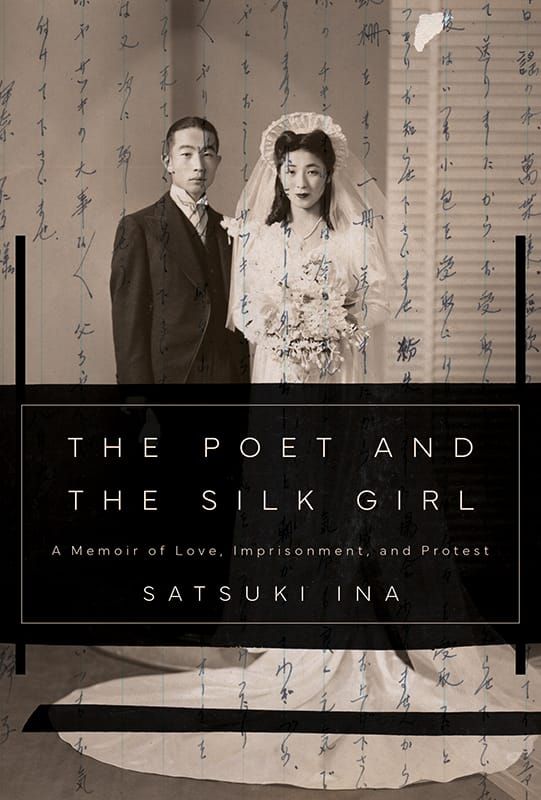
The Poet and the Silk Girl
In early 2025 I was invited by American poet and professor Brandon Shimoda to an online reading with Satsuki Ina of her book The Poet and the Silk Girl: A Memoir of Love, Imprisonment, and Protest.
I had a longstanding commitment that night on Vashon Island, a 20-minute ferry ride from southwest Seattle and joined the call en route. Several years ago, I had seen Vashon Heritage Museum’s permanent exhibition dedicated to the 111 Japanese residents of Vashon Island who were forcibly exiled on May 16, 1942.
Ina tells the story of how her mother and father come to the states from Japan, how they met, married, and became citizens of the United States only to be abandoned by their new government in this other era of hysteria and madness. As part of this betrayal, Japanese American families like hers were forced to leave behind their businesses and homes, which were often seized or sold off for a fraction of their value. Weaving together diary entries, photography, letters, and poetry, we witness first-hand what it’s like to be a legal citizen locked away inhumanely; the thoughtless suffering inflicted on our neighbors; the intergenerational trauma engendered by ignorance, racism, and us-and-them-fueled shortsightedness.
Relative to Vashon Heritage Museum’s exhibit and the importance of Vashon in my life, listening to Ina’s wisdom from there felt well aligned. That night, as she read from the last chapter of the book, “Healing”, I pulled over on a side road among many trees. She had begun describing Tsuru for Solidarity’s 2019 journey to the border of Texas and Mexico for an event in partnership with the Laredo Immigration Alliance (LIA). Tsuru is a nonviolent, direct-action project of Japanese American social justice advocates and allies working to end immigrant detention sites and support front-line communities targeted by state violence. LIA advocates for immigrant rights and supports directly impacted, low-income families in Webb County, Texas.
The Tsuru group consisted of 20 members, including a Buddhist minister and several survivors and descendants including Ina’s brother, Kiyoshi. When they arrived, the room was filled with children and mothers who had just been released after weeks and months of incarceration—“grief weighed heavily in the room” (285).
The Latine families created a circle of chairs around the room with the Japanese American visitors who made and played with colorful, paper origami cranes with the children. Generally after a Tsuru action, everyone in attendance gathers to share their experience. This circle unfolded organically with the room full of strangers. Kiyoshi rose first to speak sharing that even after being incarcerated as a child for 4 years, he was okay. He had survived. He furthermore encouraged the families not to give up hope.
A woman beside him, with baby in arms, stood up and said “I feared for my children. We were hungry and afraid every day. When I hear you were in prison for years, my heart aches for you. I cannot imagine your suffering” (286). Ina was profoundly moved by this woman’s empathy so soon after the woman and her children’s own experience of gross injustice. Ina writes “this moment felt especially sacred, as compassion flowed from this woman who had suffered horrific trauma herself. It was a moment of true humanity” (286).
Ina was born in Tule Lake Segregation Center, a maximum-security prison camp in Northern California, during WWII in May 1944. When Satsuki Ina was just shy of one year old, my grandfather marched with the 45th Infantry Division in liberating Dachau. (I remain convinced that this had significant impact on his well-being for the rest of his life.) American “heroes liberated Dachau” while we actively incarcerated legal citizens in our own country. While reading this book, I kept thinking about where my family members were relative to the dates of journal entries and letters. Ina and her family were released from the Crystal City, Texas concentration camp, 5 months before my own mother was born.